
For dietitians who reduce metabolic burden and prove it
Measure diet’s real impact at the tissue level with a quick, non-invasive scan revealing AGE accumulation, a marker of long-term metabolic burden.
The Challenge
While you provide evidence-based dietary advice, can you measure its actual metabolic impact?
Weight improves, labs shift, and clients say they’re following the plan, but none of these tell you what’s happening at the tissue level, where the real burden of years of dietary patterns accumulates.
Compliance without proof
Clients follow the plan or say they do, but whether their body is actually responding at the metabolic level remains invisible.
Calories vs. food quality
Caloric intake is measurable, but the cumulative tissue-level impact of food quality has been a blind spot until now.
Motivation stalls
Progress shows early and then slows, yet without a biomarker to point to, follow-up consultations feel like repetition rather than progress.
Beyond bloodwork
Lab markers are snapshots that don’t capture the long-term metabolic burden that dietary patterns build up over years of accumulation.
Compliance without proof
Clients follow the plan or say they do, but whether their body is actually responding at the metabolic level remains invisible.
Calories vs. food quality
Caloric intake is measurable, but the cumulative tissue-level impact of food quality has been a blind spot until now.
Motivation stalls
Progress shows early and then slows, yet without a biomarker to point to, follow-up consultations feel like repetition rather than progress.
Beyond bloodwork
Lab markers are snapshots that don’t capture the long-term metabolic burden that dietary patterns build up over years of accumulation.
The Mechanism
What are AGEs and why they matter to dietitians

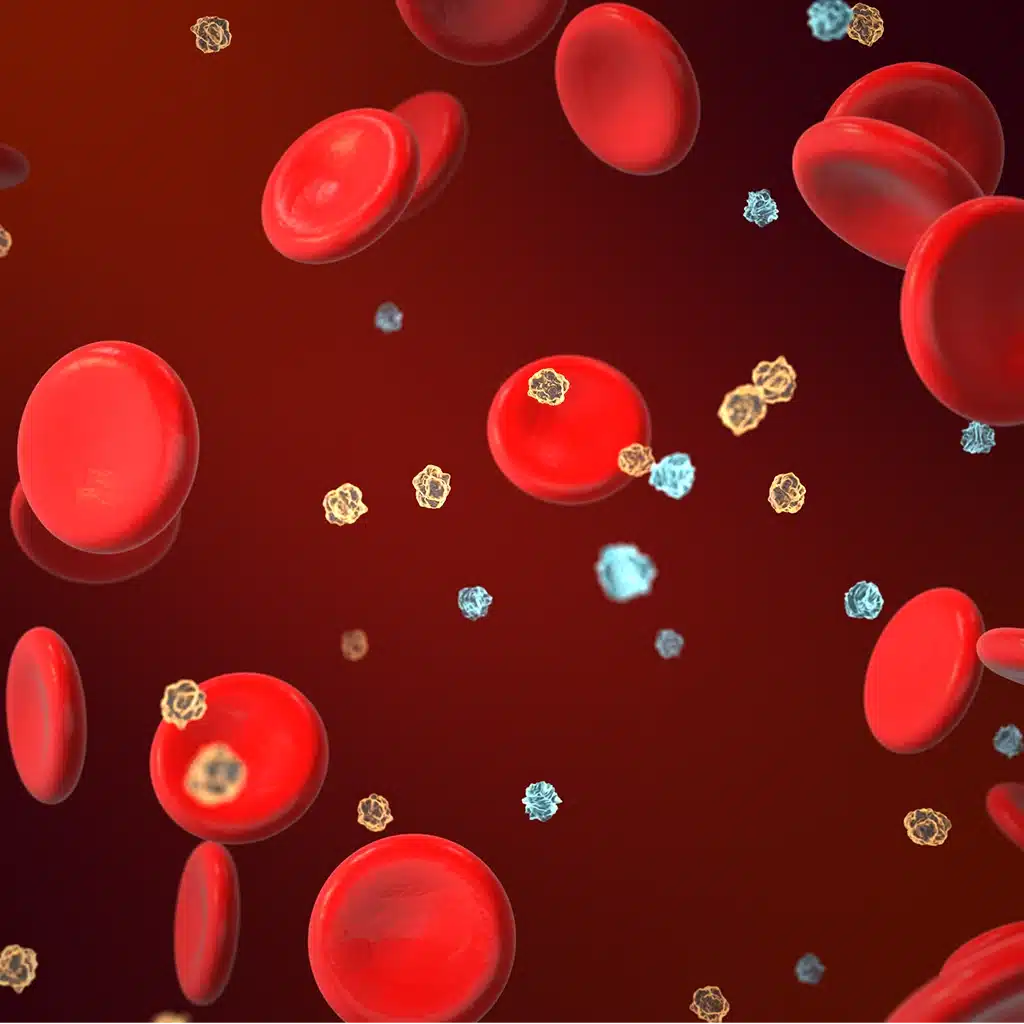
Advanced Glycation End-products (AGEs) form when sugars bind to proteins and fats in the body, creating compounds that accumulate irreversibly in tissue. They impair cellular function, drive chronic low-grade inflammation, and accelerate biological aging. Unlike most biomarkers, AGEs don’t spike and recover. They build over time, a direct reflection of dietary patterns, cooking methods, and metabolic load across months and years.
Diet is the primary driver of AGE accumulation, which makes dietitians the profession best positioned to actually reduce it.
High-sugar diets, ultra-processed foods, and high-heat cooking methods (frying, grilling) all accelerate AGE formation. A diet that controls caloric intake but ignores food quality can still produce significant AGE accumulation and the metabolic consequences that follow.
Old thinking vs. new thinking
Old Thinking
Reduce caloric load → improve health.
Weight is the primary outcome metric.
A calorie is a calorie.
New Thinking
Weight matters, but not all calories create the same metabolic burden.
Food quality determines what happens at the tissue level.
AGE accumulation captures what the scale and labs cannot.
Diet is the primary driver of AGE accumulation, which makes dietitians the profession best positioned to actually reduce it.
Metabolic inflammation
Elevated AGE levels are linked to chronic low-grade inflammation, a key driver of metabolic dysfunction beyond what weight or BMI captures
Biological aging
AGEs impair insulin signaling at the cellular level, contributing to blood sugar instability that dietary advice alone may not fully address.
Metabolic inflammation
AGE accumulation correlates with biological age, giving you a concrete, client-facing number that makes the cost of poor food quality tangible.
Explore more
How it works
Everything you need to turn insight into action
In practice – just 4 simple steps
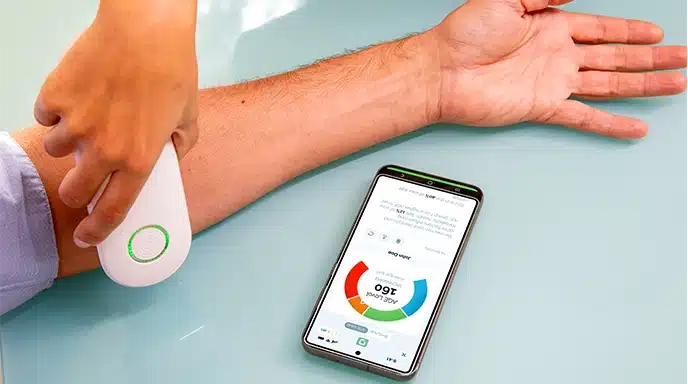
1. Measure
Capture objective AGE insight in seconds with a quick, non-invasive scan. No guesswork – just clear biological data.

2. Discuss
Make invisible skin aging visible for your client. Turn complex biology into a conversation they immediately understand.

3. Build the plan
Translate insight into a structured, personalized treatment approach. From isolated treatments to a credible long-term strategy including lasting lifestyle improvements.
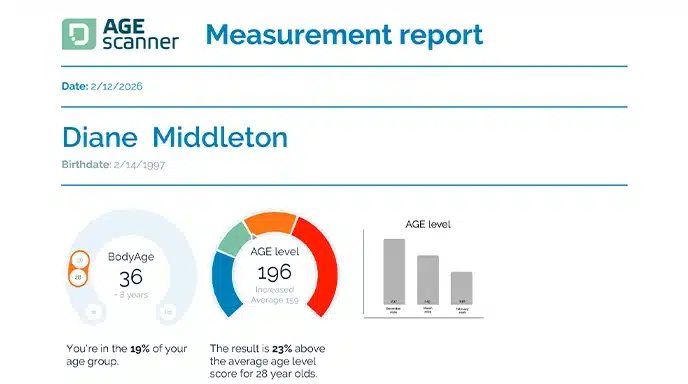
4. Track progress
Use follow-up scans to show measurable change over time. Motivation increases. Retention follows naturally.

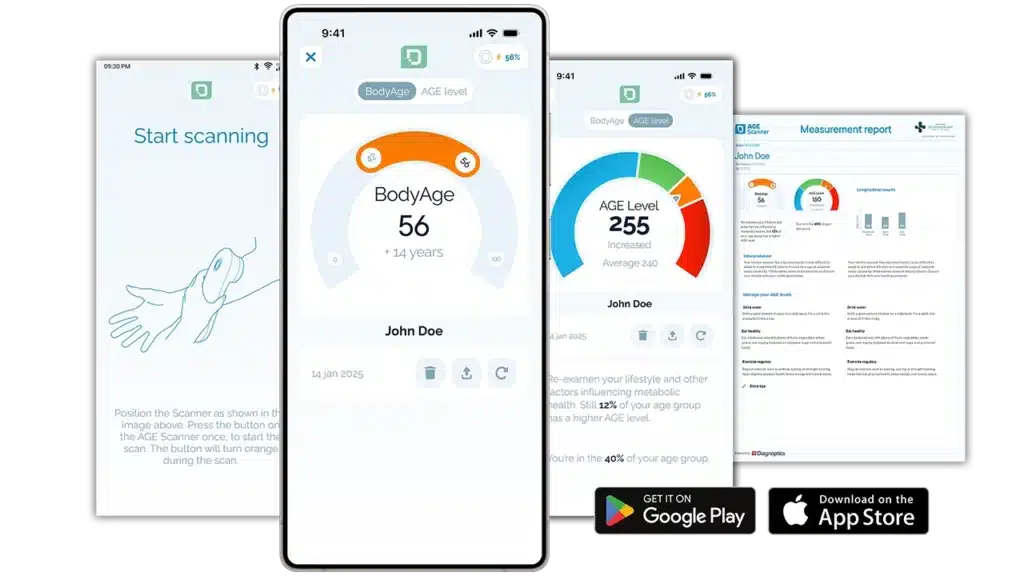
AGE Guide App
More than a scan - your professional support system
The AGE Guide App works alongside the scanner to strengthen your daily practice:
What professionals say
Experiences from therapists and
practice owners

Marleen van Dijk
Lifestyle & Orthomolecular therapist (NL)
‘Objective guidance for lifestyle’
“After using the AGE Scanner in my Utrecht practice for months, I’ve seen how it boosts the credibility of my assessments. Clients love having a clear, objective number to guide lifestyle changes. I only wish the trend analysis were a bit more detailed, but it’s already a core part of my intake.”

Dr. Ravi Prakash
Ayurvedic practitioner (India)
‘Bridging traditional care and data’
“The AGE Scanner helps me bridge Ayurvedic assessment with modern measurable data. Patients understand their metabolic stress much faster. It’s not a diagnostic tool, and they need that reminder, but it has strengthened trust and improved compliance with treatment plans.”

Sienna Clarke
Integrative health coach (Australia)
‘Quick, reliable lifestyle insight’
“In my practice in Melbourne, the AGE Scanner provides a quick, accessible snapshot that gets clients thinking seriously about their habits. It’s easy to use and reliable, though I’d love a more rugged, outreach-friendly design. Still, it has elevated the quality of my consultations.”

Dr. Johannes Meyer
Functional medicine practitioner (Germany)
‘Big-picture aging awareness’
“The AGE Scanner adds real value to my clinic in Munich by giving clients a simple, big-picture indicator of tissue aging before we dive into deeper testing. It doesn’t replace labs, but it helps people understand why we order them. It has made education during consultations far easier.” — Dr. Johannes Meyer (Germany)

Carlo Ribeiro
Nutritionist (Brazil)
‘Professional insight into lifestyle’
“Using the AGE Scanner in São Paulo has helped me show clients the long-term impact of lifestyle choices in a way that simple questionnaires never could. The device feels professional and trustworthy, though I do hope future updates add more features than what many free wellness apps offer. Even so, it has become part of every first consultation.”
FAQ
Is the AGE Scanner a diagnostic device?
No. The AGE Scanner is a professional wellness and monitoring tool. It measures AGE accumulation as a metabolic indicator — it does not diagnose disease or replace clinical assessment.
How does it complement existing lab work?
Bloodwork captures specific markers at a moment in time. AGE measurement reflects cumulative tissuelevel burden from dietary patterns across months and years, it adds a dimension that standard labs don’t capture.
How quickly can AGE levels change with dietary intervention?
AGE accumulation is a slow process and so is reversal. Meaningful change typically becomes measurable over several months of consistent dietary improvement. This makes it a strong tool for longterm client engagement and follow-up.
What dietary factors most influence AGE levels?
Sugar intake, ultra-processed food consumption, and high-heat cooking methods (frying, grilling, roasting at high temperatures) are the primary dietary drivers. Blood sugar stability and overall food quality are the main levers for reduction.
Does it fit into a standard consultation workflow?
Yes. The scan takes seconds and the app supports your existing intake and follow-up structure. Most practitioners integrate it into their standard first consultation without extending appointment time significantly.
Let’s connect
Request a demo or contact us
Would you like to see how the AGE Scanner works in practice or discuss integration into your practise? Request a demonstration or reach out to our team.
We are happy to provide details, answer questions, and explore how AGE measurement can support your work.